
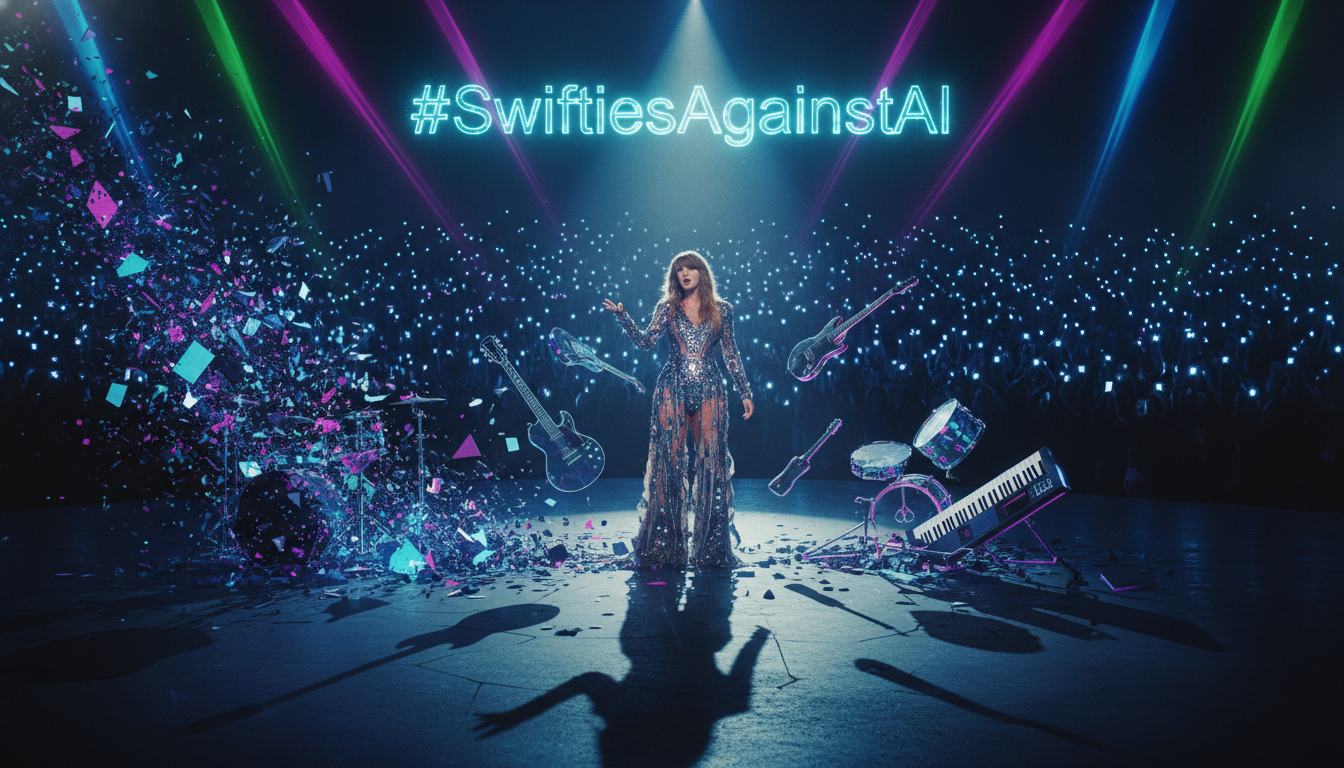
The global entertainment landscape is currently reeling from the fallout of Taylor Swift’s ‘Life of a Showgirl’ promotional campaign, which has sparked an unprecedented firestorm over the use of generative AI in mainstream art. What began as a high-concept ‘digital treasure hunt’ involving twelve orange doors placed in major cities quickly soured as eagle-eyed fans identified tell-tale AI glitches in the reveal videos. Disappearing limbs, distorted carousel horses, and warped musical instruments have turned a celebration of artistry into a battleground for creative integrity, leading to the viral explosion of the #SwiftiesAgainstAI movement. This controversy is not just about a few poorly rendered pixels; it represents a fundamental clash between the world’s most powerful fanbase and the encroaching automation of the creative industries. For years, Swift has been the champion of artist ownership and the ‘human soul’ in music, making the alleged use of Google’s AI tools for her latest rollout feel like a profound betrayal to her millions of followers. The backlash has seen graphic designers and industry veterans alike pointing out the ‘wonky’ shadows and impossible physics as evidence that even the highest-tier productions are now cutting corners with algorithmic generation. From a global business perspective, the stakes are massive, as this incident has forced a public reckoning for the tech giants partnering with A-list talent. Google and other AI developers are finding that technical capability is only half the battle; consumer acceptance and ethical transparency are the true hurdles to the ‘Visual Intelligence’ era. As major studios and marketing firms watch the #SwiftiesAgainstAI hashtag dominate trending charts, many are reconsidering their own AI-integration timelines to avoid similar PR catastrophes. Looking forward, this scandal marks a definitive turning point in the relationship between technology and fame. We are entering an age where ‘perfection’ is no longer the goal, but rather the ‘human flaw’ that AI cannot yet replicate. Whether this revolt leads to a new era of mandatory AI disclosure or a full-scale retreat from generative tools in celebrity branding remains to be seen, but for now, the message from the public is clear: art must remain human, or it risks losing its crown.