
## Introduction
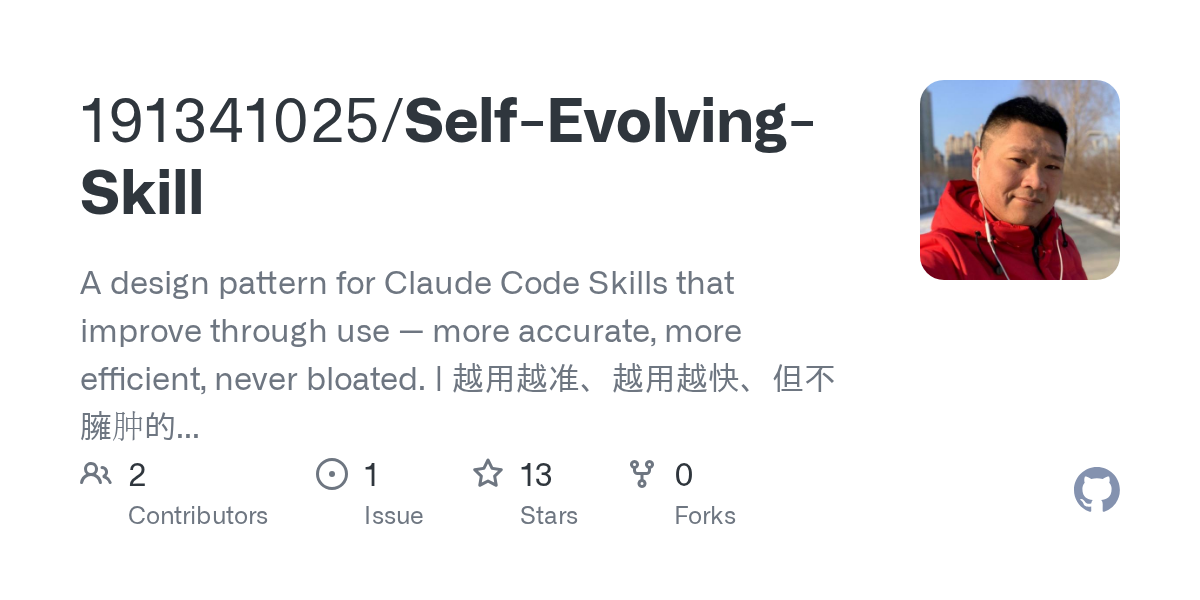
In an era where artificial intelligence (AI) continues to advance at an unprecedented pace, a groundbreaking governance pattern for self-evolving AI skills has been unveiled. This innovative design pattern, known as Claude Code Skills, promises to allow AI systems to improve their accuracy and efficiency through continuous use without becoming overly complex or bloated. This article examines the potential of this governance pattern and its implications for the future of AI development.
## Understanding Claude Code Skills
Claude Code Skills represent a novel approach to AI skill enhancement, focusing on the following key aspects:
– **Self-Evolution**: As the skills are utilized, they adapt and improve based on the input and outcomes derived from their usage.
– **Efficiency**: The skills become increasingly effective over time, ensuring that users benefit from improved performance without needing extensive reprogramming.
– **Simplicity**: Despite the advanced capabilities, the design ensures that the system remains streamlined, avoiding unnecessary complexity that can hinder performance.
## The Design Pattern Explained
The governance pattern for self-evolving AI skills incorporates various elements:
– **Feedback Loops**: Continuous feedback from users allows the AI to learn and refine its skills dynamically.
– **Performance Metrics**: By utilizing specific metrics to evaluate efficiency, the AI can identify areas for improvement, ensuring ongoing effectiveness.
– **User-Centric Approach**: The design pattern prioritizes user experience, allowing for intuitive interactions that drive continuous learning and adaptation.
## Potential Applications
The implications of implementing Claude Code Skills are vast and varied. Some potential applications include:
– **Customer Support**: AI systems can improve responses to customer queries rapidly, learning from each interaction to provide better resolutions.
– **Healthcare**: Self-evolving AI can adapt to new medical knowledge and improve diagnostic capabilities, resulting in enhanced patient care.
– **Programming Assistance**: Development tools that evolve with feedback can streamline coding tasks, learning from user input.
## Advantages of Self-Evolving Skills
The benefits of this governance pattern extend beyond mere efficiency:
– **Reduced Maintenance Overhead**: As the skills evolve and improve on their own, the need for manual updates decreases.
– **Scalability**: Organizations can implement these self-evolving systems across various functions without significant resource investment.
– **Adaptability**: The AI can promptly respond to changes in its environment or scope, making it highly relevant.
## Challenges and Considerations
Despite its many advantages, several challenges may arise in implementing self-evolving AI skills:
– **Data Privacy**: Continuous learning requires data, raising concerns about user privacy and data handling practices.
– **Quality Control**: Ensuring the AI evolves in the right direction without deteriorating performance is vital.
– **Integration**: Incorporating such advanced skills into existing systems may necessitate upfront investment in training and refinement.
## Conclusion
The introduction of the governance pattern for self-evolving AI skills marks a significant step forward in the evolution of artificial intelligence. As Claude Code Skills demonstrate their capacity for improvement and efficiency, they pave the way for new possibilities in AI applications. Through careful implementation and addressing potential challenges, organizations can harness this innovative approach to enhance their operations and user experiences. To explore the full design pattern and its implementation, visit the original repository [here](https://github.com/191341025/Self-Evolving-Skill).