
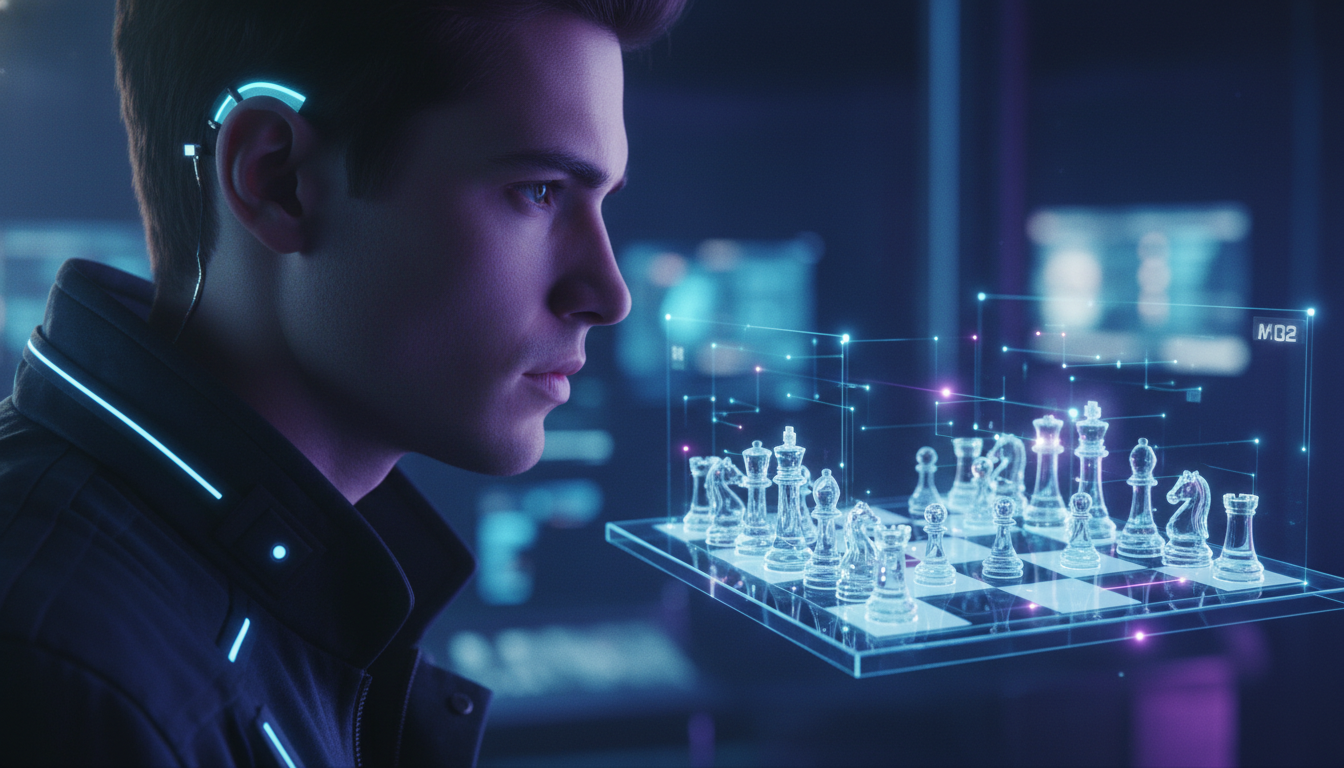
The line between science fiction and reality has officially blurred as Noland Arbaugh, the first human recipient of Elon Musk’s Neuralink implant, demonstrates what he calls ‘Telepathy.’ After a diving accident left him paralyzed from the shoulders down nearly a decade ago, Arbaugh is now doing the unthinkable: controlling digital interfaces with nothing but his mind. Recent videos of him playing complex games like Civilization VI and online chess have sent shockwaves across the internet, proving that brain-computer interfaces are no longer a laboratory pipe dream. This breakthrough represents a tectonic shift in the field of AI Technology. By utilizing 1,024 ultra-thin electrodes to record and translate neural activity into computer commands, Neuralink is effectively creating a high-bandwidth bridge between human consciousness and silicon. While the technology is currently focused on restoring autonomy to those with disabilities, the implications for the future of human-computer interaction are staggering. We are witnessing the first real-world steps toward a ‘Cyberpunk’ era where information can be accessed and manipulated at the speed of thought. The global business landscape is already reacting, with billions being poured into neurotechnology as companies race to claim a stake in the next frontier of the human experience. However, this progress brings with it a host of ethical and societal questions. As we move closer to a world where our brains are directly connected to the web, we must grapple with issues of privacy, security, and what it truly means to be human in an augmented age. For now, Arbaugh’s story remains a beacon of hope and a viral testament to the power of human innovation, marking the beginning of a journey that will likely redefine our species for generations to come.