
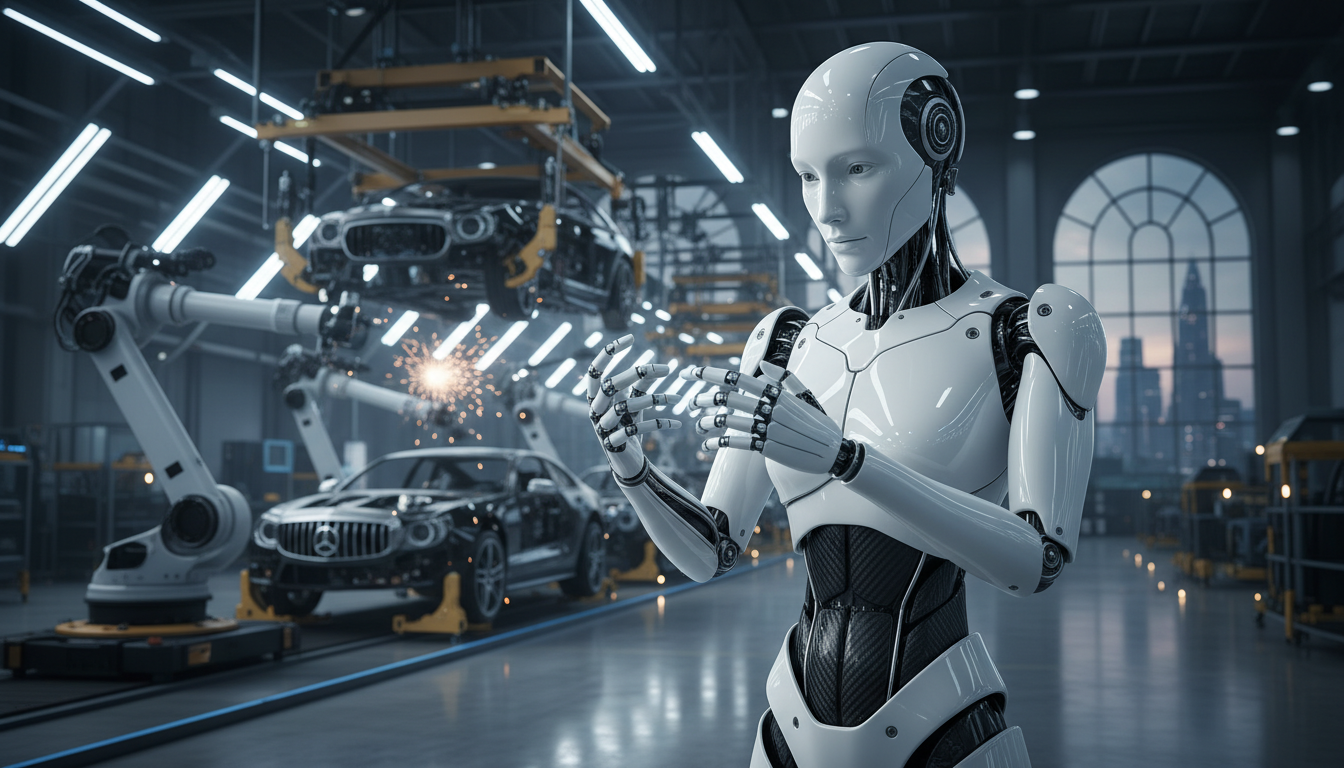
In a move that has sent shockwaves through both the automotive and tech industries, Elon Musk has confirmed that Tesla is officially winding down production of its flagship Model S and Model X vehicles to clear space for the mass production of the Optimus Gen 3 humanoid robot. The Fremont factory, once the heart of the electric vehicle revolution, is currently being gutted and refitted to serve as the world’s first high-volume ‘robot foundry.’ With a target of one million units per year, this pivot signals Tesla’s definitive transition from a car manufacturer to a robotics and AI powerhouse.
The newly revealed Gen 3 Optimus is a staggering leap forward in physical artificial intelligence. Boasting hands with 22 degrees of freedom and 50 actuators, the robot can now perform tasks as delicate as threading a needle or as complex as internal logistics. Perhaps most impressively, it features an integrated ‘Grok-powered’ voice interface, allowing users to give natural language commands that the robot interprets and executes autonomously. Musk described the machine as ‘by far the most advanced robot in the world,’ claiming that its ability to learn through observation will revolutionize the global labor market within the next twenty-four months.
Investors are reacting to the news with a mix of awe and anxiety. While Tesla’s stock has seen a surge in anticipation of a ‘trillion-dollar robotics’ market, the sacrifice of the iconic Model S and Model X marks the end of an era for luxury EVs. The company’s focus is now laser-pointed at solving labor shortages and providing personal assistants for household use. This strategic shift is backed by a massive infrastructure build-out, including a new manufacturing facility at Gigafactory Texas specifically designed to scale production to 10 million units annually by the end of the decade.
Ethicists and labor experts are already sounding the alarm over the social implications of such a rapid deployment. As 1,000 Optimus units are already operating internally within Tesla’s own battery plants, the reality of automated labor is no longer a distant prophecy. The ‘Abundance Summit’ recently highlighted the potential for a post-scarcity economy, but critics argue that the displacement of human workers in manufacturing and services could create a socio-economic rift before the benefits are fully realized.
Despite the minor delay in the official public unveiling—now pushed to later this summer for ‘final refinements’—the momentum is undeniable. Pilot services are expected to launch in Texas and California by late 2026, where robots will handle everything from supply chain logistics to basic concierge roles. For the first time in history, the sci-fi dream of a mechanical workforce is moving from the laboratory to the living room, forever changing the way we define work and daily life.