
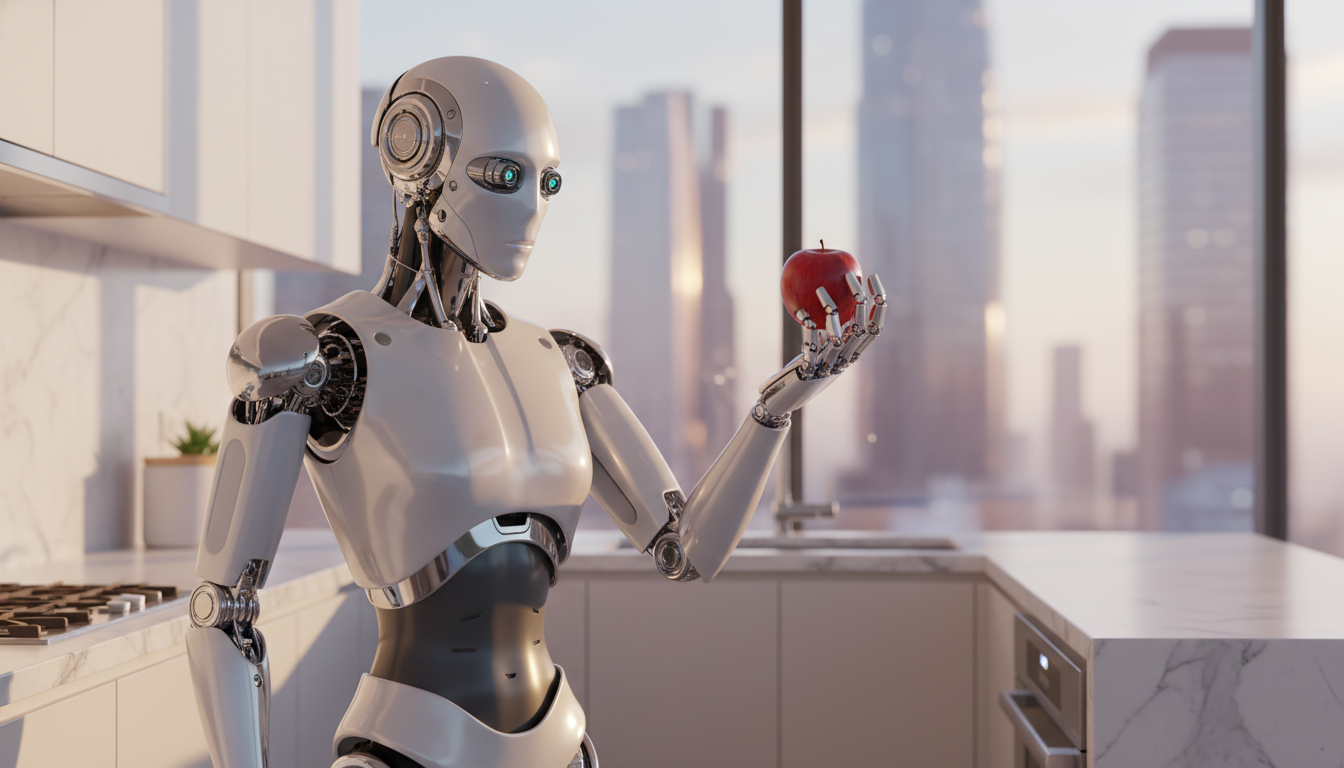
The boundary between science fiction and reality has officially dissolved. With the recent unveiling of Figure 01, a humanoid robot integrated with OpenAI’s latest multimodal models, we are witnessing the birth of a machine that doesn’t just follow code but understands the world. In a demonstration that quickly went viral, the robot was seen not only performing manual tasks like cleaning a kitchen but also explaining its reasoning in a fluid, human-like voice, marking a massive leap from the clunky automatons of the past.
At the heart of this breakthrough is a new Visual Language Model (VLM) that allows the robot to ‘see’ and ‘think’ simultaneously. Unlike previous robots that required thousands of lines of manual code for every specific movement, Figure 01 uses OpenAI’s neural networks to translate visual data and spoken commands into dexterous physical actions in real-time. During the demo, when asked for something to eat, the robot identified a red apple, picked it up with human-like precision, and handed it over, explaining that it was the only edible item available.
From a global business perspective, the implications are seismic. Industry giants like BMW are already testing these humanoids in their production facilities to handle tasks that are too repetitive or dangerous for humans. This shift toward ‘Robotics as a Service’ (RaaS) suggests a future where companies can subscribe to a workforce of general-purpose robots, potentially disrupting trillion-dollar industries ranging from manufacturing to elder care. Investors are pouring billions into the sector, betting that humanoid robots will be as ubiquitous as the personal computer was in the 1990s.
Naturally, this rapid advancement has sparked a fierce debate across social media. While many are in awe of the technology’s potential to eliminate mundane labor, others are grappling with existential dread as the ‘uncanny valley’ is crossed. The viral footage of the robot exhibiting ‘common sense’ has forced a global conversation about the future of human employment and the ethical guardrails needed as AI gains a physical presence in our homes and workplaces.
As we stand on the precipice of this new era, the humanoid revolution is no longer a ‘coming soon’ attraction—it is happening now. Whether these machines end up as our most valuable assistants or our biggest economic challengers, the integration of AI into physical forms is the final frontier of the digital revolution. The question is no longer if we will live alongside robots, but how quickly we can redefine what it means to be a worker in a world that no longer requires human hands for every task.