
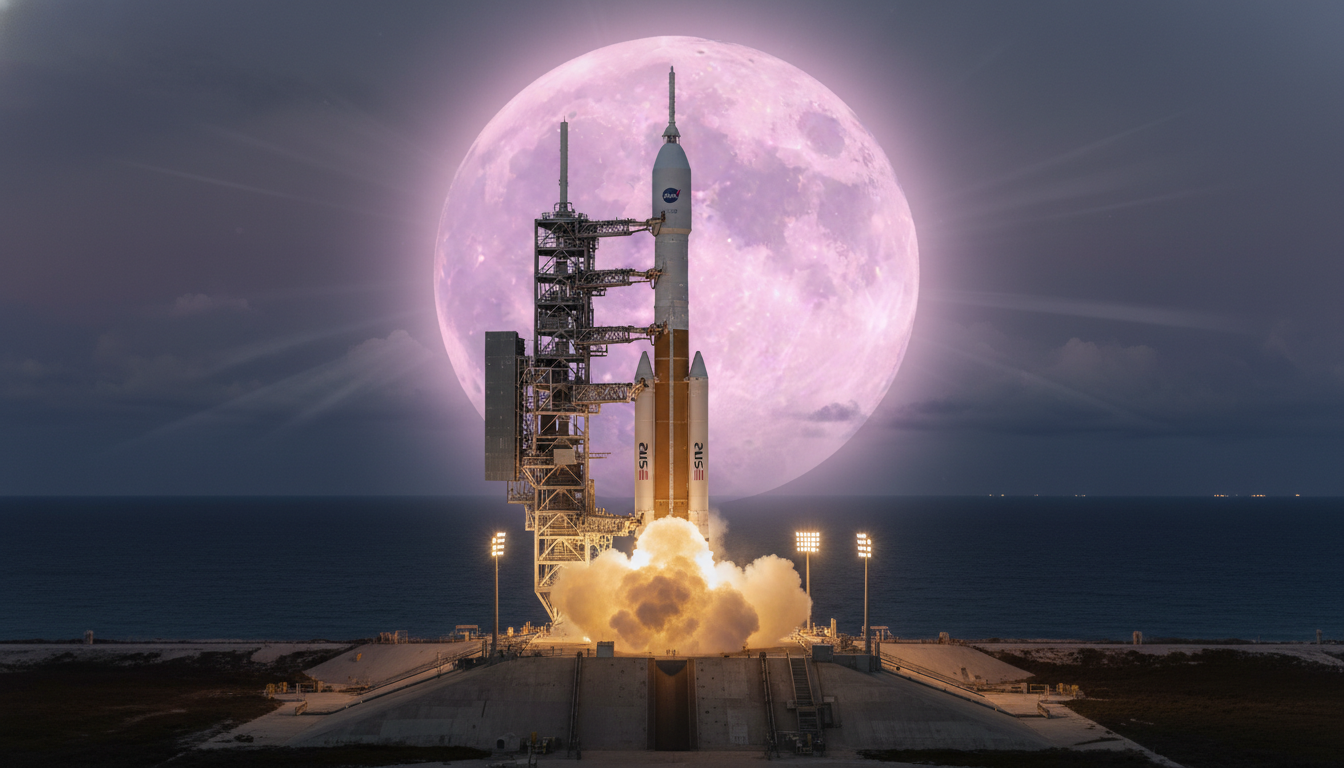
For the first time in over half a century, humanity is heading back to the lunar neighborhood. Today, April 1, 2026, marks the opening of NASA’s first launch window for the Artemis II mission. This isn’t just another satellite deployment; it is a 10-day journey that will carry four brave souls around the Moon and back, officially ending the ‘pre-lunar’ era and setting the stage for a permanent human presence on the lunar surface. The world is watching as the Space Launch System (SLS) rocket stands ready to pierce the atmosphere. The crew represents the best of us: Commander Reid Wiseman, Pilot Victor Glover, and Mission Specialists Christina Koch and Jeremy Hansen. Glover will become the first person of color, and Koch the first woman, to ever venture into deep space. Their mission is a critical test of the Orion spacecraft’s life-support systems in a high-radiation environment far beyond the protection of the International Space Station. Every maneuver they perform over the next week will be a blueprint for the Artemis III landing scheduled for next year. Adding to the cinematic drama of the launch is a rare astronomical coincidence. The Artemis II liftoff window aligns perfectly with April’s ‘Pink Moon.’ While the moon itself won’t actually change color, its appearance as a full, bright orb in the spring sky provides a poetic backdrop for the Orion’s departure. Photographers and stargazers worldwide are already flooding social media with images of the moon, calling it a ‘heavenly green light’ for the astronauts’ journey. From a global perspective, this mission is the opening salvo in a new international space race. With China accelerating its own plans for a 2029 lunar landing, the success of Artemis II is a statement of American and partner-nation leadership in technology and exploration. The mission also serves as a gateway to Mars; the Gateway lunar outpost is already being planned with nuclear power in mind, proving that the Moon is just the first step in a much longer voyage across the stars. Ultimately, Artemis II is about more than just science or politics; it is about the human spirit’s refusal to stay grounded. As the engines ignite and the countdown reaches zero, billions of people will experience a shared moment of wonder—a rare instance of global unity in a fractured world. We are no longer just dreaming of the stars; we are reclaiming our place among them. The Artemis generation has arrived, and the moon is no longer a distant light, but a destination.