
### Introduction
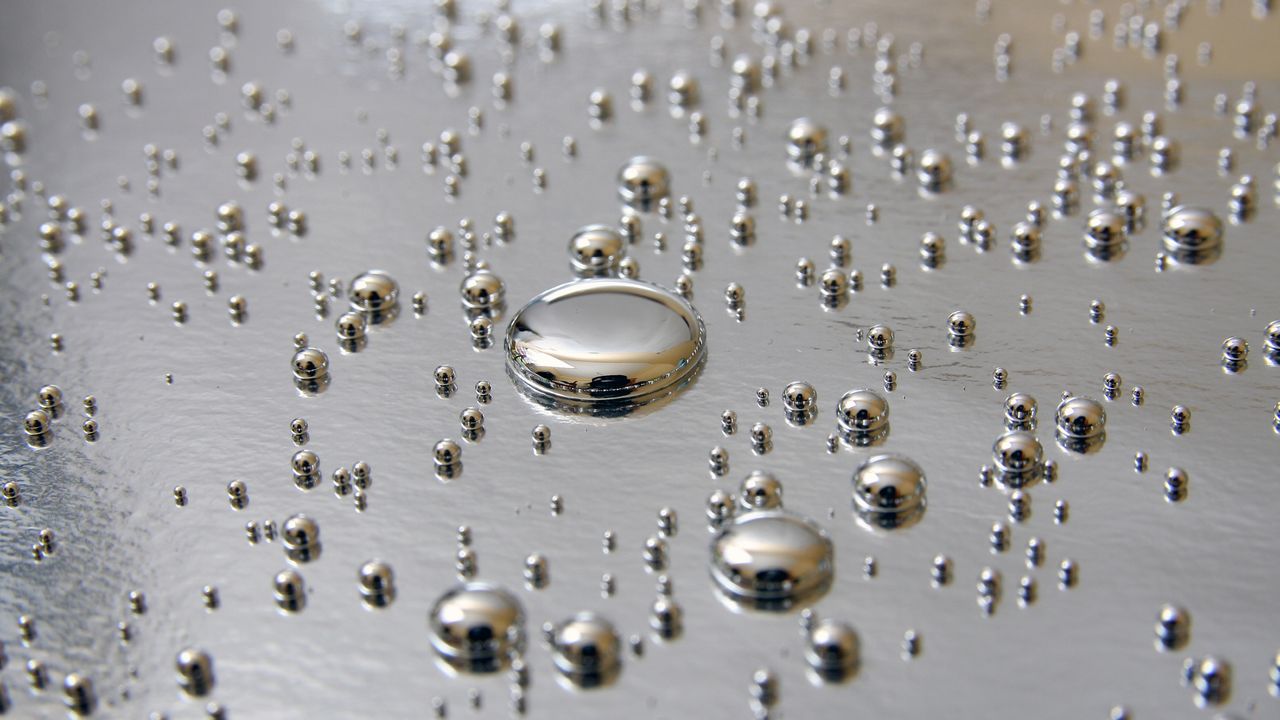
Mercury, a distinct element in the periodic table, stands out among metals due to its unusual property of being a liquid at room temperature. This peculiarity raises interesting questions about the nature of this metal and the forces that govern its state. In this article, we will explore the reasons behind mercury’s liquid form and its implications in various fields.
### What Makes Mercury Unique?
Mercury (Hg) is not only known for its liquid state but also for several other fascinating characteristics:
– **High Density**: Mercury is the densest of all metals, which contributes to its unique behavior.
– **Low Melting Point**: Mercury melts at -38.83 degrees Celsius, which is significantly lower than most metals.
– **Toxicity**: It is known to be toxic, making its handling and usage in products like thermometers and barometers contentious.
### The Science Behind Mercury’s Liquid State
#### Atomic Structure
The key to understanding why mercury is liquid lies within its atomic structure. As a transition metal, mercury has a full complement of d-electrons, which allows it to form metallic bonds. However, unlike other metals, the d-subshell electrons in mercury do not allow for strong bonding due to relativistic effects, which occur because of the high speed of inner electrons.
#### Electron Configuration
– Electron configuration of mercury: [Xe] 4f14 5d10 6s2
The relativistic effects mean that in mercury, the inner electrons are pulled closer to the nucleus, causing outer electrons to feel lesser attraction. This weakens the metallic bonding forces, allowing it to remain in a liquid state at room temperature.
### Comparison with Other Metals
To further illustrate mercury’s unique property, we can compare it to other common metals:
– **Lead** has a melting point of 327.5 degrees Celsius and remains solid at room temperature.
– **Gallium** melts at about 29.76 degrees Celsius, yet it still solidifies at slightly above room temperature.
– **Bismuth**, another metal, stays solid until it reaches a melting point of 271.4 degrees Celsius.
Clearly, mercury’s properties set it apart, primarily due to its bonding is influenced by relativistic effects.
### Applications of Mercury
Mercury’s unique liquid state makes it useful in various applications, including:
– **Thermometers**: Historically used due to its predictable thermal expansion.
– **Barometers**: Used in measuring atmospheric pressure.
– **Dentistry**: Historically used in amalgams for dental fillings.
– **Industrial Uses**: Employed in some electrical switches and as a catalyst in chemical reactions.
### Conclusion
The liquid state of mercury at room temperature provides a fascinating topic for scientific discussion and exploration. Its unique properties not only make it essential in certain applications but also a subject of concern due to its toxicity. Understanding why mercury remains liquid can shed light on the broader principles governing metallic properties and bonding. As we look to the future, innovative alternatives to mercury are necessary, especially as awareness of environmental and health impacts grows.
For more in-depth information, visit [Live Science’s article on mercury](https://www.livescience.com/chemistry/why-is-mercury-a-liquid).