
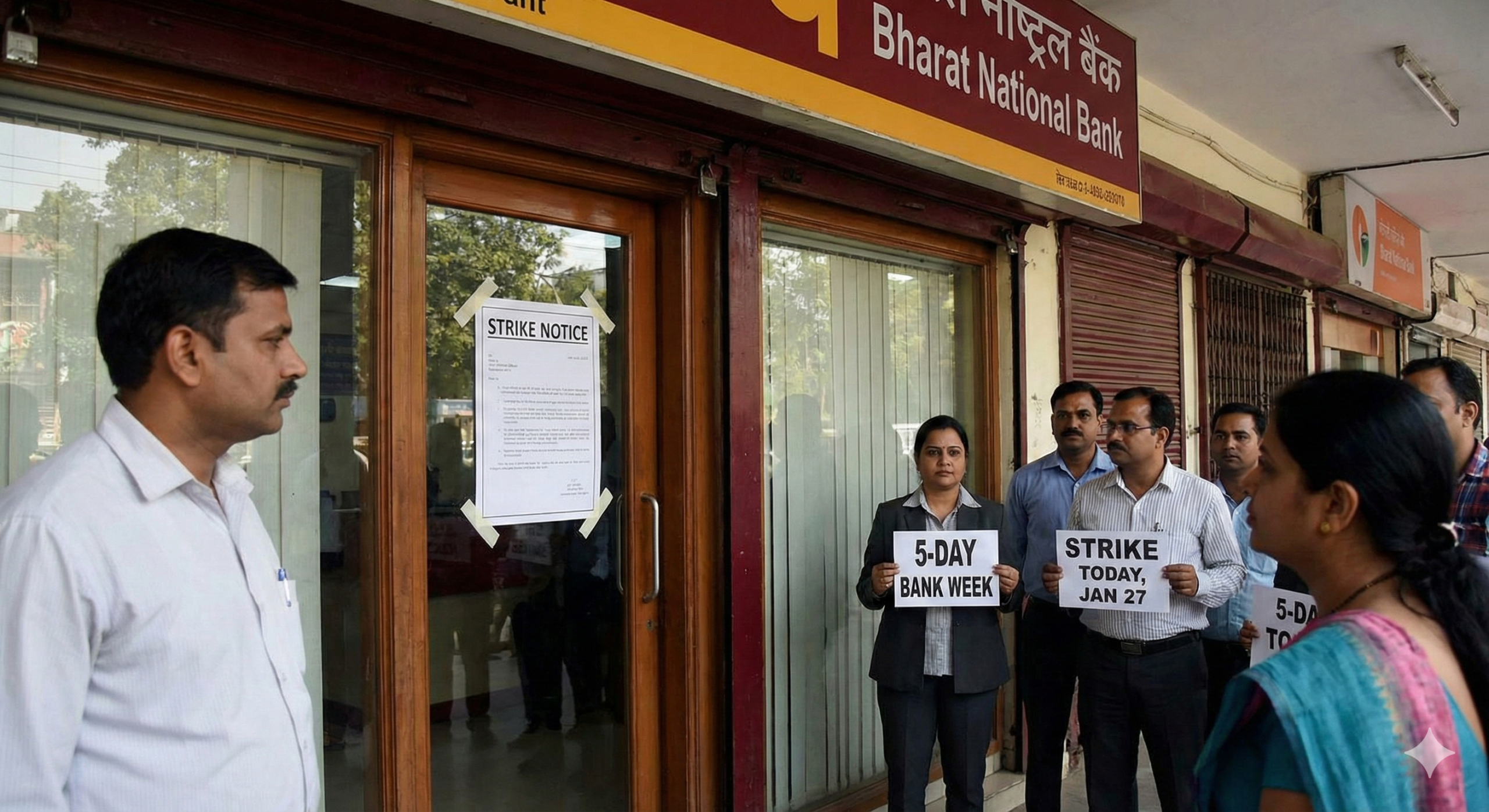
If you have urgent banking to do—depositing a cheque, accessing a locker, or handling large cash withdrawals—stop what you are doing and read this.
Public sector banks across India are gearing up for a nationwide strike on January 27, 2026. Because of how the calendar falls this year, this strike isn’t just a one-day inconvenience; it creates a potential four-day service blackout that could catch millions of customers off guard.
Here is everything you need to know to prepare, why it’s happening, and which banks are actually closing.
🗓️ The Timeline: Why 4 Days?
The strike is technically only for one day (January 27). However, when combined with weekends and national holidays, we are looking at a significant stretch of closures.
Here is the likely breakdown of the long weekend:
- January 24 (Saturday): Fourth Saturday (Usually a Bank Holiday)
- January 25 (Sunday): Weekly Off
- January 26 (Monday): Republic Day (National Holiday)
- January 27 (Tuesday): Proposed Nationwide Strike
The Bottom Line: If you don’t finish your branch-based work by Friday, January 23, you might be stuck waiting until Wednesday, January 28.
🏦 Which Banks Are Affected?
Not every bank is shutting its doors. The strike is primarily led by unions within Public Sector Undertakings (PSUs).
- Likely to be CLOSED: State Bank of India (SBI), Punjab National Bank (PNB), Bank of Baroda (BoB), Bank of India, and other government-owned lenders.
- Likely to stay OPEN: Private sector heavyweights like HDFC, ICICI, and Kotak Mahindra are unlikely to join the strike, meaning their branches should operate normally.
🛑 Why Are They Striking? (The “5-Day Week” Debate)
It’s not just about wages—it’s about work-life balance.
The United Forum of Bank Unions (UFBU) is demanding a 5-day work week for bank employees.
- The Argument: Unions argue that contrary to promises made during the March 2024 wage revision talks, bank employees are still working six days a week (except for the 2nd and 4th Saturdays).
- The Compromise: Employees have offered to work 40 extra minutes daily from Monday to Friday to compensate for the lost Saturday hours, ensuring productivity doesn’t drop.
- The Trigger: Despite conciliation meetings, the unions feel the government has ignored the agreement, leaving them “no choice” but to strike right after Republic Day to make a point.
📱 Will ATMs and UPI Still Work?
Yes, but proceed with caution.
- Digital is Safe: UPI, Mobile Banking, and Net Banking will work seamlessly.
- ATMs might dry up: While ATM machines are automated, they need humans to refill them with cash. With a potential 4-day break, cash-heavy areas might see ATMs running out of money by Monday.
- Cheques are stuck: If you drop a cheque on Saturday, do not expect it to clear until the strike is over.
✅ Your Action Plan
Don’t wait until the last minute. Here is how to avoid the headache:
- Get Cash Early: Withdraw any cash you need for the long weekend before January 24.
- Visit the Branch Now: If you need to access a locker, update KYC, or sign loan documents, do it before Friday.
- Stick to Digital: Rely on GPay, Paytm, or direct transfers for payments during the shutdown.
🗣️ What Do You Think?
Do you support the bank employees’ demand for a 5-day work week, or is the disruption to public service too high a cost? Let me know in the comments below!